
Send a payment link and choose the amount
A payment link lets a guest pay from their own phone instead of at your desk. The host sends it, the guest taps the button in the email, and the payment lands on the same reservation. You decide how much the link collects: the whole outstanding balance, a share of it, or an amount you type.
Send a link for a saved reservation
Open the reservation
Tap Check In in the dock, find the reservation and tap it. You can also tap the booking on the Calendar.
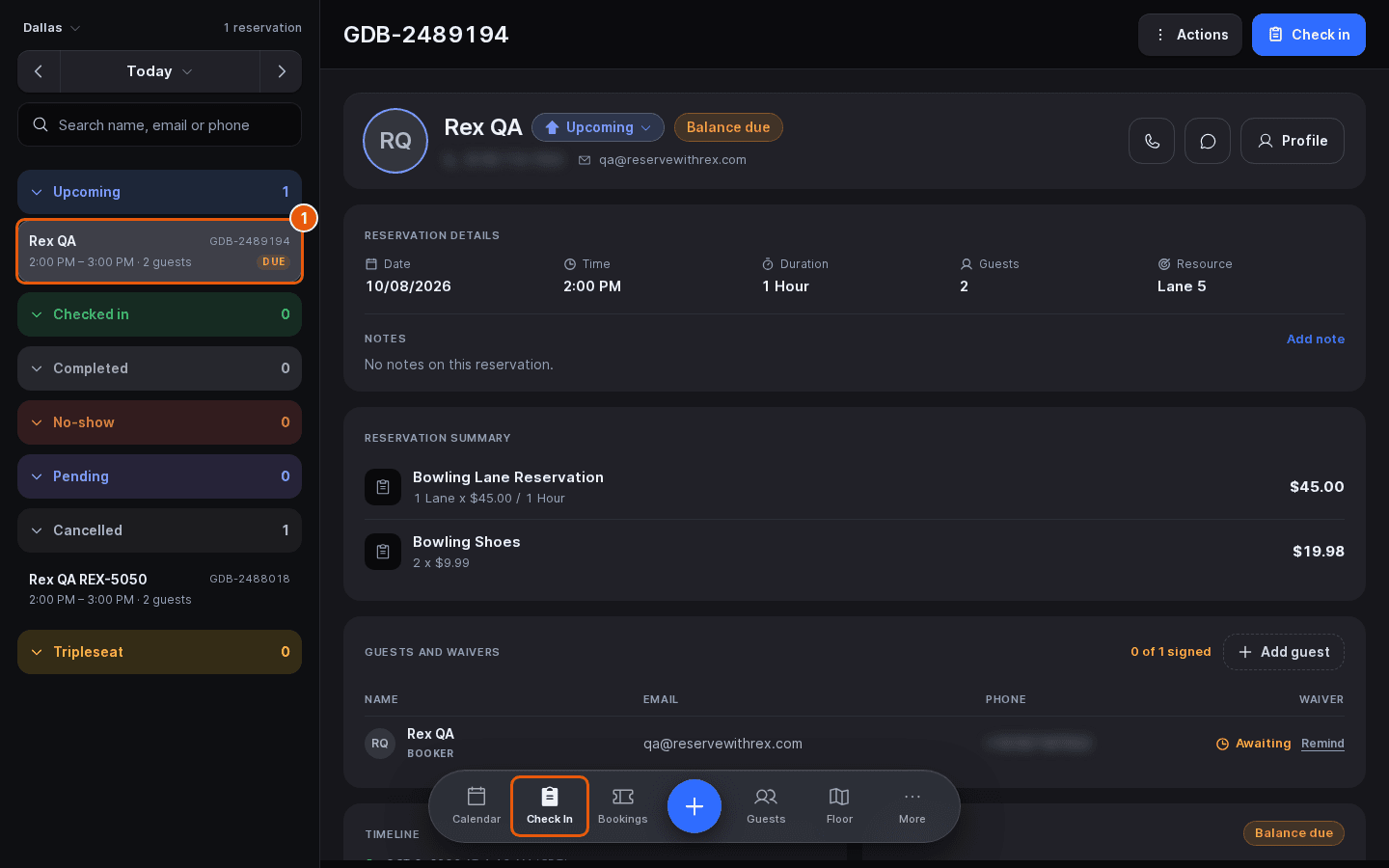
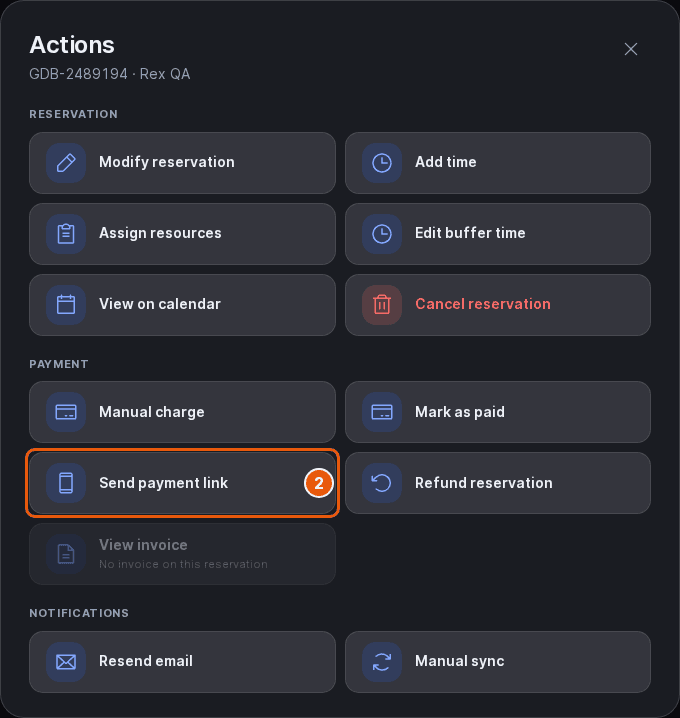
Select Send payment link
Tap Actions at the top right, then Send payment link in the Payment group. The sheet shows the guest's balance.
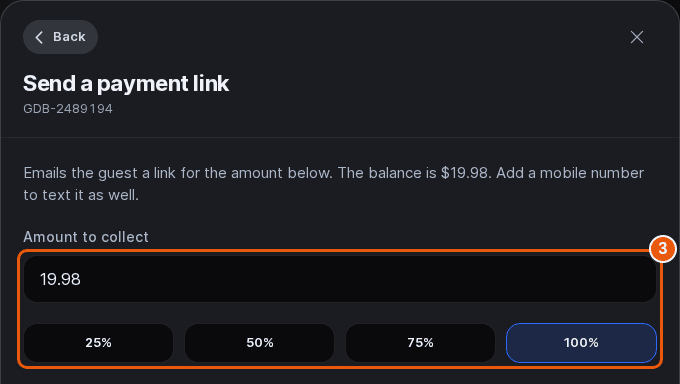
Set the Amount to collect
The field starts at the full balance. Keep it, tap 25%, 50%, 75% or 100% for that share of the balance, or type any figure up to the balance, such as a round $50 deposit on a $180 party. A figure above the balance is cut back to the balance.
Check the guest's contact details
Email is filled in from the reservation. Add a number under Mobile (optional) to text the link as well.
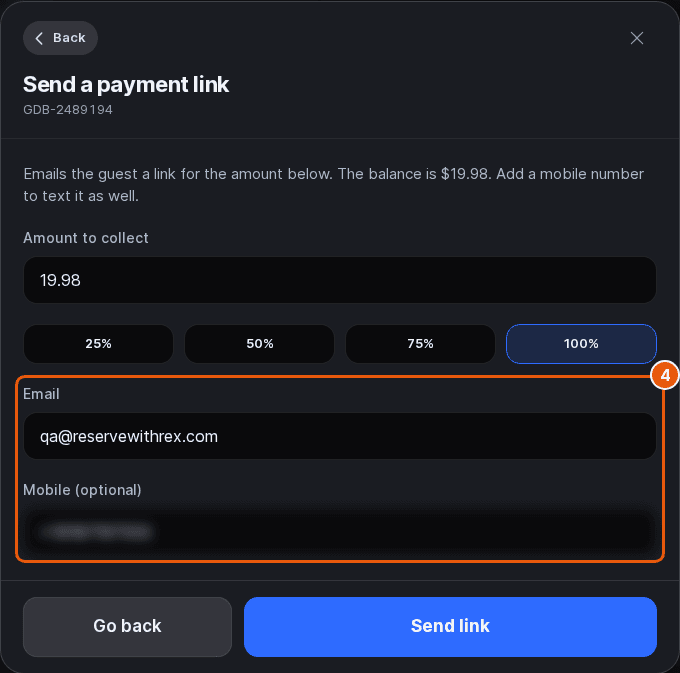
Click Send link
The sheet confirms Payment link sent. Nothing is charged until the guest pays, so you can still take payment another way if plans change.
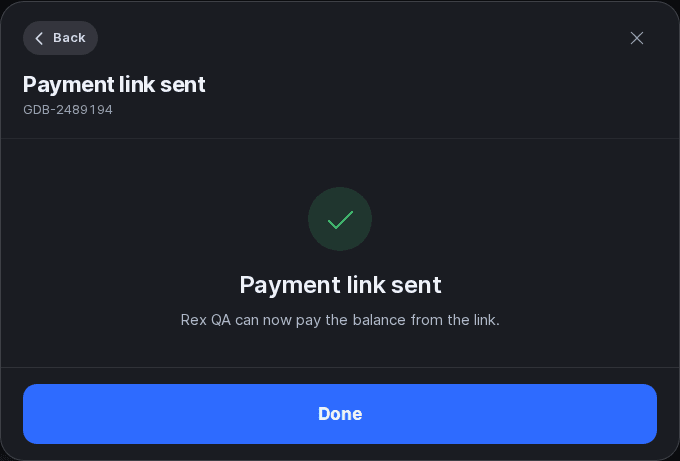
Send payment link is always available on a saved reservation. Offering Payment link as a payment method while creating a booking needs the venue setting below.
Offer a payment link while creating a booking
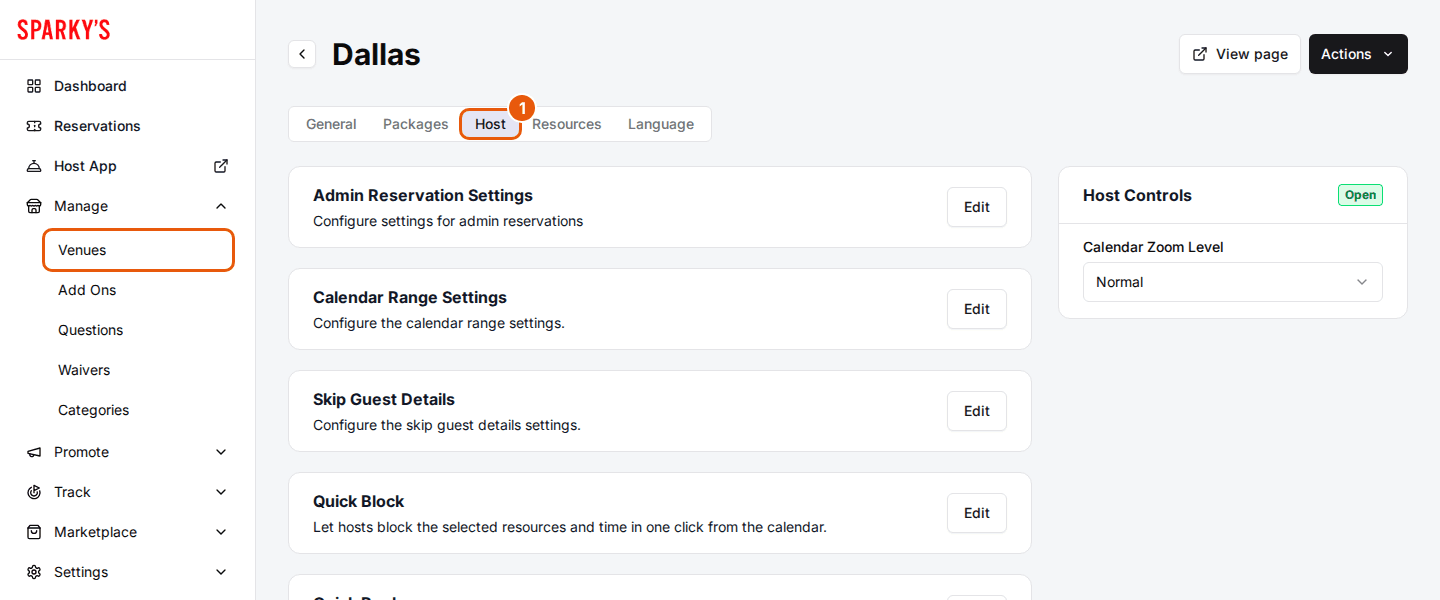
Open the venue's Host tab
In the admin dashboard, open the venue and its Host tab.
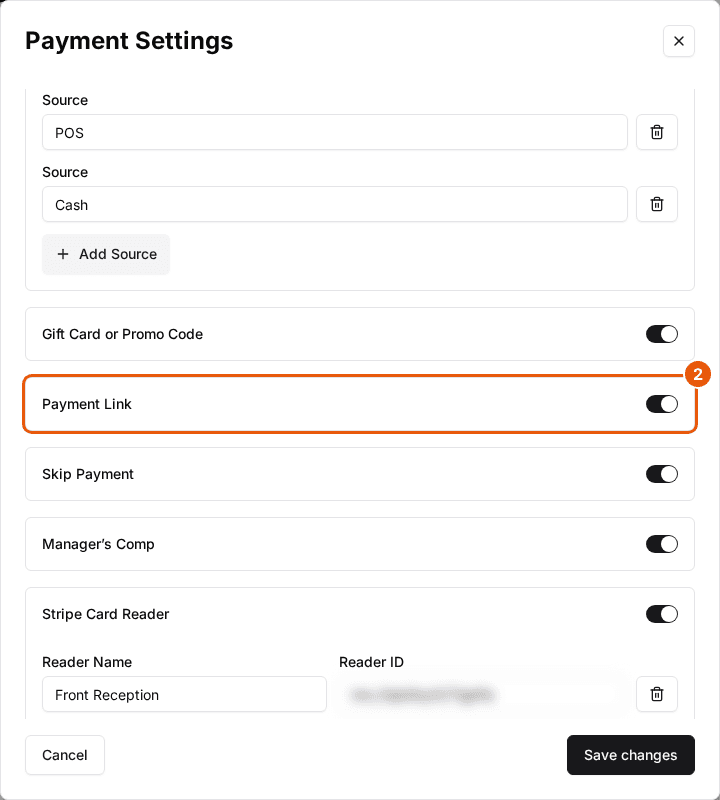
Toggle Payment Link
Click Edit on the Payment Settings card, turn on Payment Link under Payment Options, then click Save changes. Hosts now see Payment link at the payment step.
Then, at the payment step of the Create screen, choose Payment link. The Send a link to pay panel shows the outstanding balance, an Amount field with the same 25% to 100% shortcuts, Email address and, when texting is set up for the venue, Phone number. The amount starts at the package deposit when the package takes one, otherwise at the full balance. Tap Reserve to save the booking and send the link.
How the amount behaves
| Field | Description |
|---|---|
| Starting value | On a saved reservation, the outstanding balance: the total, less anything already paid, less any Manager's Comp. On a new booking, the package deposit if the package takes one, otherwise the balance. |
| 25% / 50% / 75% / 100% | Fill the field with that share of the outstanding balance. 100% asks for the whole thing. |
| A typed amount | Any figure up to the balance. A higher figure is cut back to the balance, and the guest is never charged more than they owe. |
The figure follows the booking rather than freezing in place. Take a cash payment at the desk or use Mark as paid after sending the link, and the link asks the guest for the smaller amount that is left. Once the guest has paid through the link, opening it again no longer asks for the earlier amount; it falls back to whatever balance remains, which is usually nothing.
This is what makes a 0% deposit package workable. Keep the deposit at 0% so the booking page asks nothing up front, then collect by link whenever it suits you: a deposit a week out, the rest on the day.
What your guests see
The confirmation email carries the pay button and no figure. The guest sees the amount on the payment page itself, in the Due Now row. On a package with a 0% deposit the payment page still shows a Deposit line reading 0%; that line describes the package's deposit rule, and the figure the guest is charged is always the Due Now row.
When there's nothing left to collect
A booking that is fully paid, or fully covered by Manager's Comp, has a balance of $0.00, so the amount field starts empty and there is nothing for a link to collect. Once the guest pays, the payment shows on the reservation like any other, and you can refund it the same way; see Refund a reservation from the Host App.
Updated Oct 8, 2026
Was this helpful?